


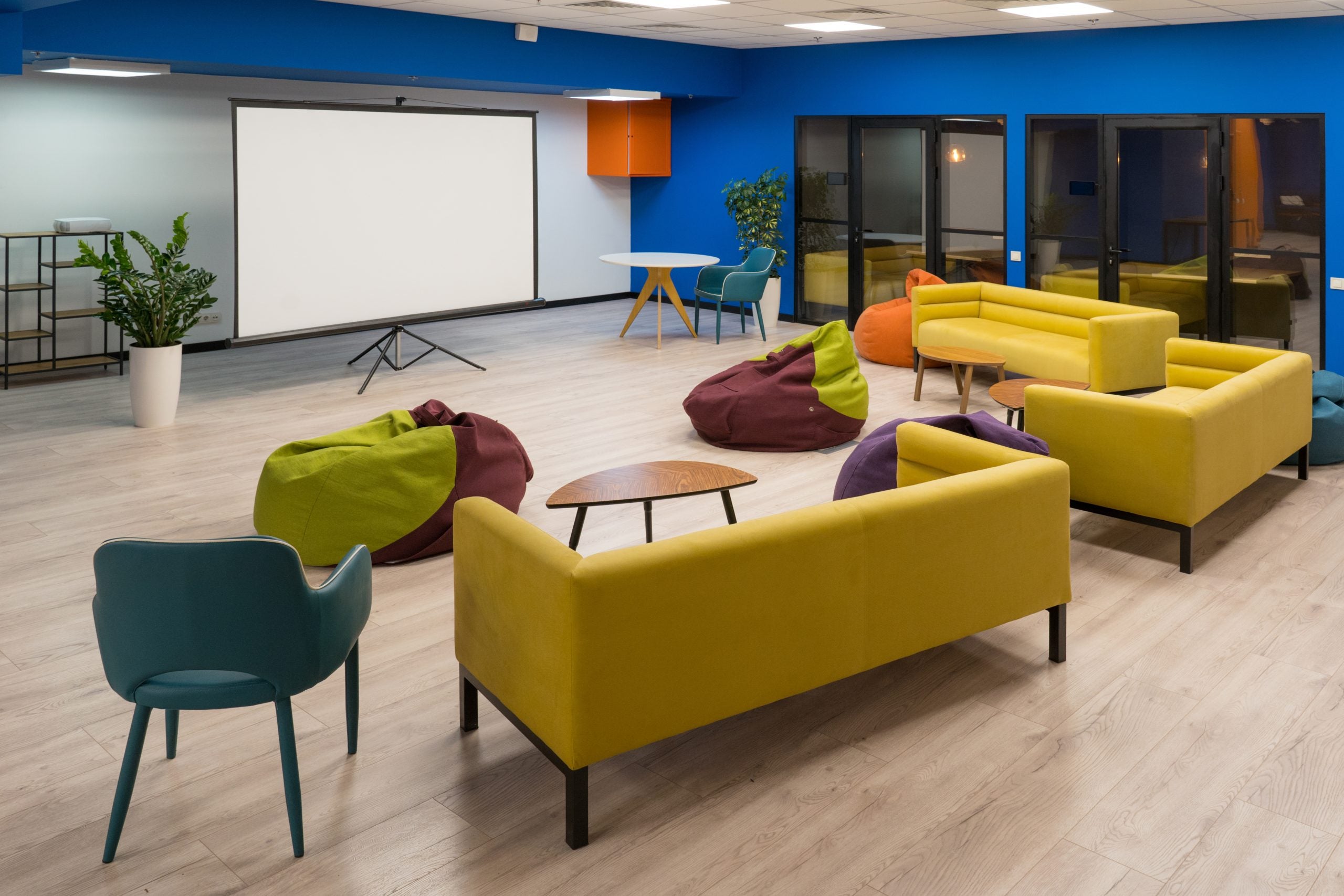
Look, we’ve all seen it. You’ve got a nice office, but even when people show up, the place feels empty. Everyone has their headphones on, staring at a screen, just waiting for the clock to hit 5:00 so they can bail. We spent a lot of money on tech so people could work from home, but we forgot to give them a reason to actually come in.
Are your people coming in because they want to, or just because they have to? That’s the big question for 2026. We’re still treating the office like a place to just grind through a to-do list. But honestly, that’s not working anymore.
The good news? There’s a huge win waiting for managers who realize that people still need to talk to other humans in cozy(-ier) places.
Understanding the Third Place
Typically the Home is considered the “First Place.” It’s your spot, and it’s where most people do their quiet work now. Your old office with the rows of desks and cubicles? That’s the “Second Place.” It’s for the usual meetings and finishing tasks.
But where do people go when they want to actually feel like they belong – where casualness and familiarity come together? Think about your favorite coffee shop or a modern library. That’s the “Third Place.” According to research from CIC, these are the spots just for hanging out and talking, separate from your house or your desk.
In 2026, since remote work is here to stay, people are getting lonely. The Executive Centre says about half of remote workers feel isolated. A boring old school style office isn’t going to help them feel motivated or better about coming in. So, smart bosses are building that “Third Place” vibe right inside their own office. It’s about making the office feel like a place people actually want to go.
Turning Your Office into a Social Hub
You don’t need to spend a fortune on a renovation to do this. It’s more about the vibe than the building. Here are a few simple ways to make people feel like they belong:
- The Central Connection Zone: Move the coffee pot or a big puzzle to a central spot where people can just hang out. Put in some comfy, fun chairs. This lets people just talk like regulars at a bistro instead of workers in a breakroom.
- Encourage Breaks: Give people a reason to put down the phone and talk for a minute. Even something small can get a conversation started and give someone an excuse to step away from the screen.
- The Welcome Back Gesture: When remote folks actually make the trip into the office, have an employee gift waiting for them. It’s a nice way to say “thanks for coming in,” and it shows them they aren’t just a random name on a screen. It’s a small thing, but it helps make sure you don’t forget to recognize your remote employees.
What it Comes Down to
At the end of the day, making a “Third Place” at work is just a smart move. We know that when people aren’t happy, it costs companies a lot of money. Most of that is just because people don’t feel connected to the team.
When your people feel like they belong—when the office is a place they actually want to be—the work usually takes care of itself. You’ll have happier, more productive employees and a much better culture. And that, my friends, is a very good thing.