


Survey: Award Buyers Prefer Fewer, More Meaningful Recognition Moments
Businesses place value on employee engagement and job satisfaction because there's a clear commercial incentive to do so. A recent study from the Incentive Research Foundation (IRF) found nearly 40% of employees regularly set personal goals tied to earning rewards or recognition, and another 43% do so occasionally. The implication is that employees who get rewarded are more productive and more engaged.
Improving engagement and employee retention, along with higher productivity, requires a suite of strategies and perks. Companies can always do more to connect with employees, boost morale and make them feel valued. Below, Successories, a custom corporate gift and employee awards supplier, shares guidance on developing employee experiences that are intentional and personal.
Prioritizing Employee Choice
In the aforementioned IRF survey, researchers found that recognition should be timely and personal.
In turn, workplace engagement thrives when employees know that their work has made a positive contribution beyond their own team or organization. When a role clearly links to improvements in others' lives, it's more enjoyable.
Employees' measurable need to feel they're making a contribution that benefits others requires a more intentional, personalized approach to experience-building, including how achievements are recognized. Taking time to recognize and celebrate individuals' successes, beyond a thank-you email or a pat on the back, provides support that many employees expect from their employer.
Establishing Trust
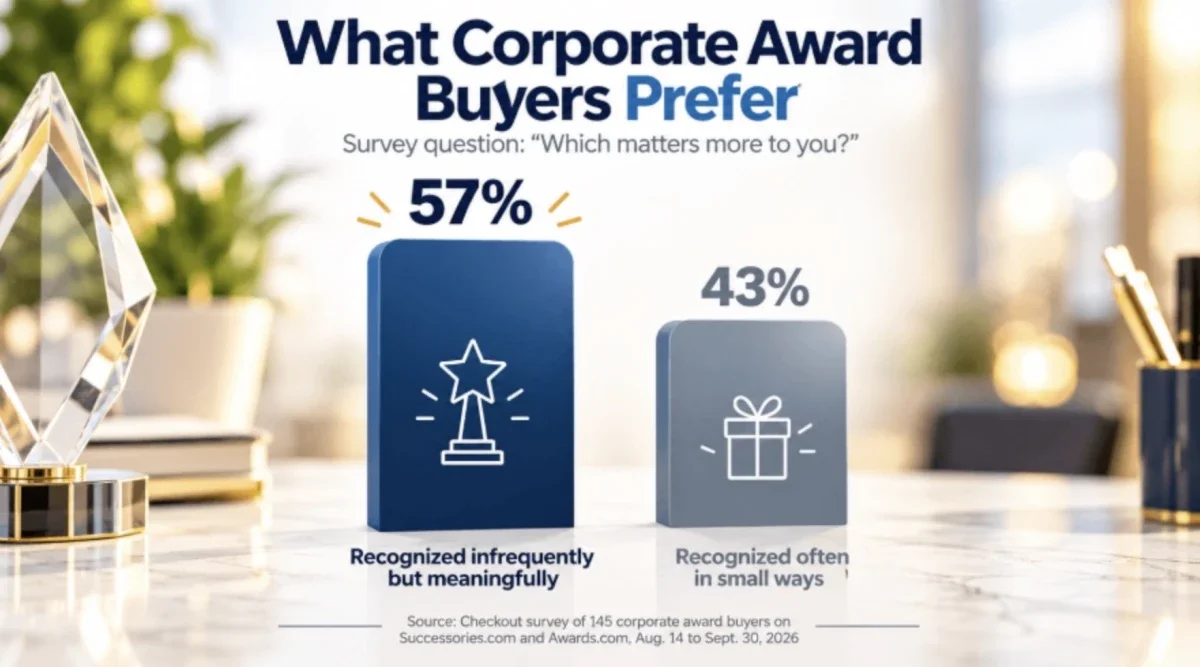
Another facet of creating a more intentional employee experience comes from the challenges and opportunities leaders face when earning and maintaining the trust of their workforce. In a checkout survey of 145 corporate award buyers on Successories.com and Awards.com (Aug. 14 to Sept. 30, 2026), 57% said infrequent but meaningful recognition matters more to them than frequent recognition in small ways.
Trust must be built in other ways, of course. PwC's Hopes and Fears Survey 2026 throws into stark relief the gap between the experience of the most engaged and capable employees and the wider workforce, especially in the context of AI's impact on the labor market. Among the frontrunner cohort, which makes up 14% of respondents in the survey, three-quarters said they trusted C-suite decision-makers, and 82% trusted those immediately above them in the chain of command. Meanwhile, 85% report confidence in their role's security.
This reinforces the idea that employees who feel empowered and in control, and properly recognized and rewarded for their achievements, are more engaged and productive. Meaningful recognition and personalized moments can help managers and executives earn loyalty and trust.
Achieving Wider Well-being
Workplace wellness initiatives aren't new, but they need to evolve, because a generic approach that doesn't account for individual needs likely won't deliver results in the long term. Top-performing companies attract and retain their most talented workers by treating employee well-being as a holistic concern and tailoring solutions for burnout and stress to each person, rather than addressing them with broad brushstrokes.
The APA's 2023 Work in America survey found that 77% of workers reported work-related stress in the past month. Addressing this reality requires a close look at workload distribution and operational efficiency, because adding more wellness webinars to an overworked employee does not address the root cause of burnout. True well-being support means managing workloads effectively and respecting personal boundaries.
A sensible approach must be grounded in the idea that teams should be enabled to do what they do best, rather than funneled down a path of new initiatives that treat stress and unsustainable workload as acute problems. Resume Now's Untapped Talent Report, covered by HR Dive, found 69% of employees say their skills and abilities aren't fully used at work, showing how many businesses still need to move toward a more intentional in-house experience. If someone spends more of their day fighting fires and plugging gaps outside their core role, it hurts engagement and satisfaction, especially if going above and beyond isn't recognized.
Enabling Internal Mobility
Modern professionals increasingly prioritize growth over static job security. When companies rely solely on external hiring to fill specialized roles, they often miss the hidden potential residing within their own walls. Creating transparent internal talent marketplaces shifts the focus toward skills-based progression. Employees want to know that their current organization values their adaptability and is willing to invest in their transition into new business areas.
Internal mobility has moved up the agenda: over 80% of organizations now call it a significant or critical part of their talent strategy, according to an HR.com study. Workers who can seamlessly pivot into different departments without leaving their employer gain renewed motivation and a broader understanding of the business ecosystem. This approach requires managers to act as talent brokers rather than gatekeepers, actively encouraging their best people to explore new internal opportunities. When career development becomes an open highway, instead of a narrow staircase, employees feel genuinely supported in their professional journey.
Sustaining Meaningful Workplace Culture
Building a resilient, intentional employee experience is an ongoing commitment, not a temporary project. Organizations must continuously evaluate their programs against shifting economic and social expectations.
Leaders who stay adaptable and empathetic will navigate future workplace transitions more successfully. Cultivating a thriving culture requires dedication and clarity, along with a willingness to put people first at every level of the enterprise. Given that managers and leaders can struggle with stress and anxiety alongside their team members, it's especially important to think about this as a top-down issue.