The New Meaning of Staying Put as Job Tenures Rebound
Switching employers in a short period of time (aka job hopping) used to be a recipe for success. During the so-called Great Resignation of 2021 to 2022, bouncing from job to job paid: a 2022 Pew Research Center report found 60% of job switchers saw real earnings gains, against 47% of those who stayed.
Things have calmed down since. The premium for switching hasn't vanished (ADP's August 2026 data shows gross pay growth of 7.3% for job changers against 4.4% for those who stay), but Fortune reports the gap is the smallest it has been in 10 years. Staying put no longer costs what it used to.
The tenure data now shows the same shift. Workers are staying longer than they did 2 years ago, even as Gen Z still moves more than anyone. As Successories explains below, understanding the benefits of loyalty for employees and retention strategies for employers reveals why longer tenure matters today.
The Strategic Shift in Job Tenure Patterns
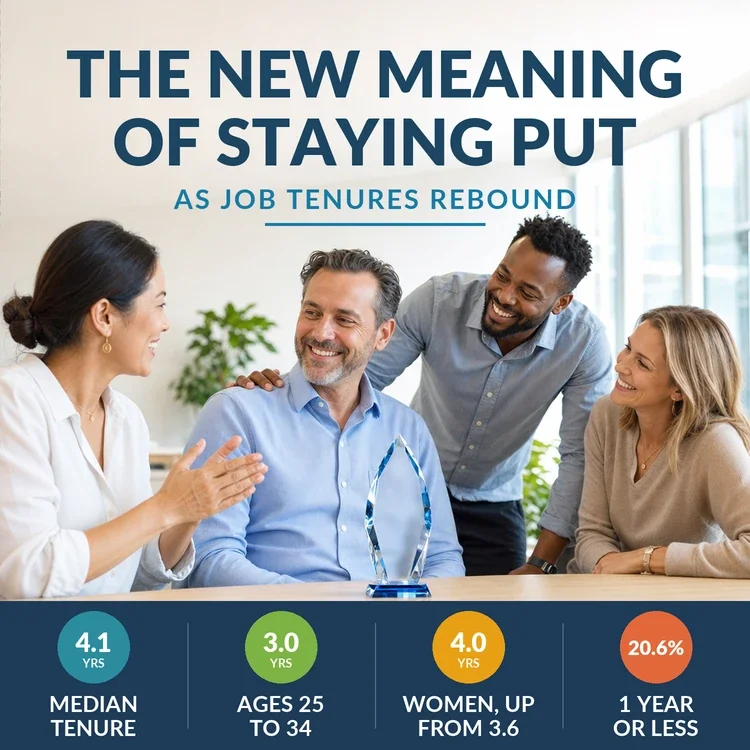
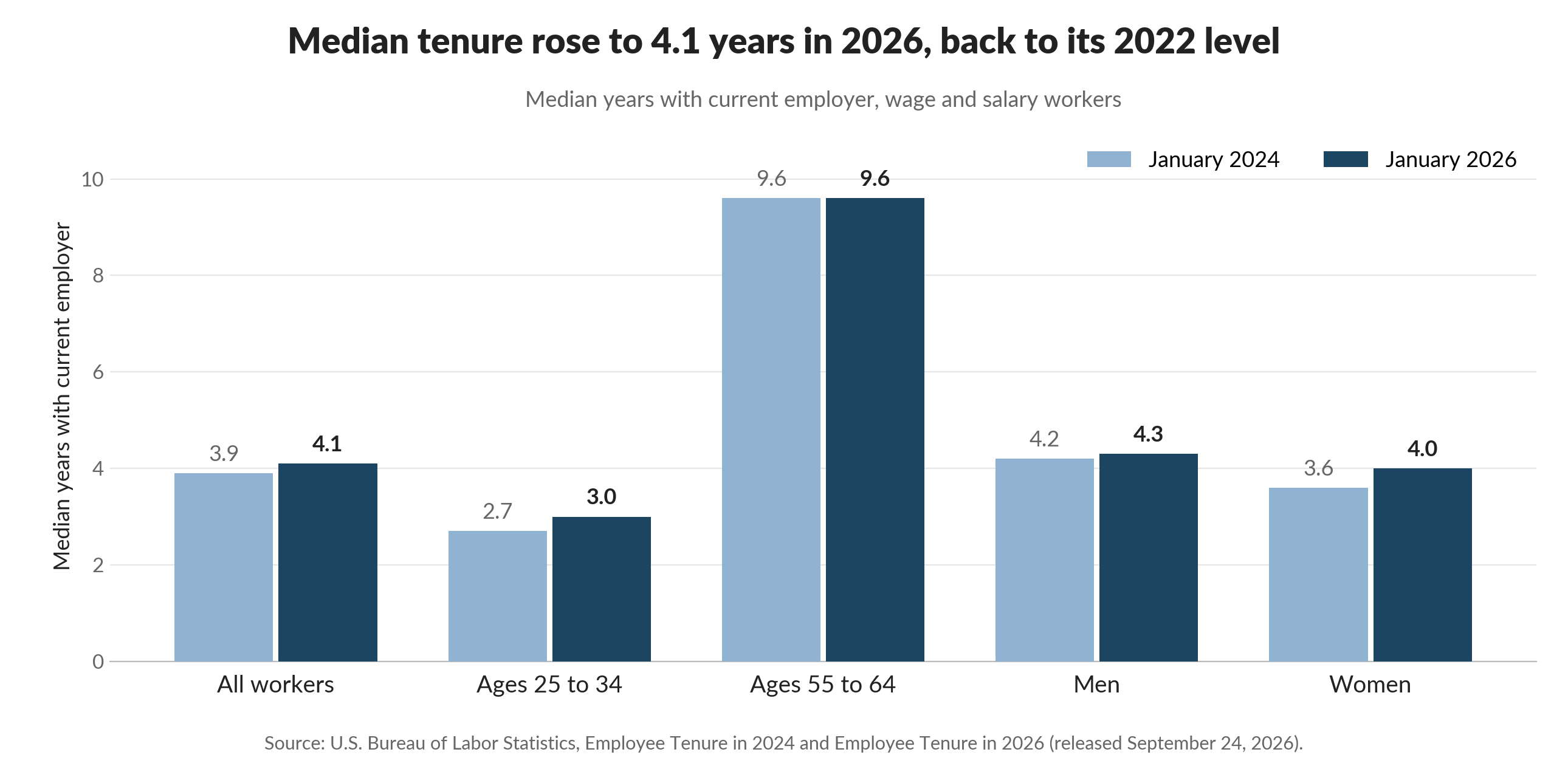
According to Bureau of Labor Statistics data released in September 2026, median tenure rose for both men (4.2 to 4.3 years) and women (3.6 to 4.0 years), and the share of workers with a year or less on the job fell from 22.2% to 20.6%. Employees now stay put, at the median, 4.1 years, up from 3.9 years in 2024 and back to where it stood in 2022.
Young workers (25 to 34) have a median job tenure of 3.0 years, up from 2.7 years in 2024. Gen Z and some millennials still move more than older workers. A 2025 article in Fortune highlights that young workers don't like staying put, even as the financial incentive has narrowed.
The incentive is professional development. Gen Z workers are not disloyal. With fewer entry-level job postings, especially in fields with high AI exposure, young workers are struggling to start their professional lives. They switch jobs to expand their professional network and diversify their skill stack.
While industries experiencing an acute lack of skilled workers still reward shorter employment tenures, switching jobs can be risky in the long term. First, it can signal unreliability to employers. Second, it takes time and energy to find and adjust to new opportunities. And third, it can be harder to build strong professional relationships.
Why Staying Put Can Make More Sense
Longer job tenures can often create stability and peace of mind. When employees are no longer focused on finding the next best thing, they can invest in building their skills, growing their careers, and contributing to the company they've chosen to stay with.
The result is often a workforce that's more engaged, productive, and invested for the long haul.
Employee Loyalty Benefits Companies
For companies, a high employee retention rate can be a sign of a good work culture. Employees often stay when they see opportunities to grow, develop their skills, and build a future within the business. Employees also stay when they know their contributions don't go unnoticed, which is exactly what years of service awards mark.
Staying Put As a Career Milestone
For employees, staying with a company that values loyalty can offer a more secure path to leadership. When senior roles open up, decision-makers may favor proven internal talent. Internal candidates already understand the business, its people, and its processes, which can mean less operational risk during the transition.
High-retention organizations often build leadership succession plans around long-tenured employees to avoid the financial drain of external recruitment, often anchored by perpetual recognition programs that keep long tenures visible.
Staying put also creates an advantage that's difficult to replicate: institutional knowledge. Over time, employees build stronger relationships, learn how decisions really get made, and become fluent in the systems and processes that keep the business running.
That familiarity can translate into sharper execution, faster decision-making, and a greater ability to take on high-impact projects.
Professional Loyalty Is Mutually Beneficial
"Staying put" can create a win-win situation for employees and employers. For the employee, long tenure yields lower operational performance risk, deep relational trust, and protection from the "last-in, first-out" layoff dynamic.
For the employer, retaining top talent lowers recruiting and onboarding costs, and it can help boost team productivity and create more cohesive teams. It also protects critical domain context from walking out the door.